
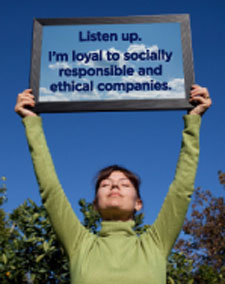
Consumers have the power to change the world. If they demand corporate responsibility from those who provide goods and services, corporations will become more socially responsible.
It’s not enough to talk about social good; you have to demand it.
Corporations have responded, in ways large and small, to increased consumer demands for social responsibility and sustainability. Even Walmart, once the poster child for mistreatment of employees throughout its supply line, now publishes detailed sustainability and social responsibility reports, including its efforts to ban child labor from the cotton fields of Uzbekistan. Apple, when taken to task for the working conditions at the factories of its suppliers, increased its oversight.
Slavery Footprint wants to make you, the consumer, more socially responsible. On its engaging website, a series of questions about where you live, what you buy, and what you eat give you the answer to the question “How many slaves work for me?”
The questions allow drilling down to details, such as eating your vegetables and what’s in your medicine cabinet, that let you see how your purchasing decisions affect the global economy. Each section has information about how those products are made; you learn a lot as you go.
It’s not as depressing as it sounds. The purpose is to create consumer awareness, to encourage people to make mindful decisions and to demand enforcement of ethical standards for workplaces and sustainability.
It’s empowering. You can make a difference. Your children can make a difference (and they’ll like going through the quiz). I didn’t like the answer I got, by the way, so I have to rethink what I purchase and where I purchase it.
But that’s the point. How many slaves do you own?
If you liked this article, you may also like:
What Is Business Ethics?
You Can’t Be Socially Responsible Without Ethical Standards
What Is Your Definition of Corporate Social Responsibility?
Ethics for Online Businesses: How do You Decide What’s Right?